

How to Diversify Fixed Income Investments Without Overcomplicating
Why Many Investors Are Moving Beyond Fixed Deposits
Imagine this.
You have ₹10 lakh parked in fixed deposits earning 6-6.5% annually. It feels safe. But with inflation hovering around 4-5%, your real return barely grows your wealth.
Now consider this:
Government securities in India are currently yielding around 6.8-7.2%.
High-quality corporate bonds can offer 7.5-8.5%, and select structured bonds may offer even more.
So the real question becomes:
Why rely on just one fixed income instrument when a simple diversification strategy could increase yields while maintaining safety?
Many retail and HNI investors assume that diversifying bonds requires complex strategies or institutional expertise. With a few practical steps, investors can build a stable, diversified fixed-income portfolio that balances safety, liquidity, and yield.
Explore our latest insights on the Indian debt market in our Daily Fixed Income Market Report.
Why Diversification Matters in Fixed Income Investing
Most investors diversify equities but forget that fixed income also carries risks.
Holding only one type of instrument like FDs or a single corporate bond, exposes investors to unnecessary concentration risk.
A diversified fixed income portfolio helps:
- Improve yield potential
- Reduce credit risk
- Manage interest rate fluctuations
- Maintain liquidity
- Generate predictable income
For example, instead of putting ₹10 lakh entirely in one FD, an investor could spread investments across government securities, corporate bonds, SDLs, and inflation-protected instruments.
This approach increases stability while improving returns.
Key Risks in Fixed Income Investing (And How to Manage Them)
Even safe investments carry risks. The goal is risk management through diversification.
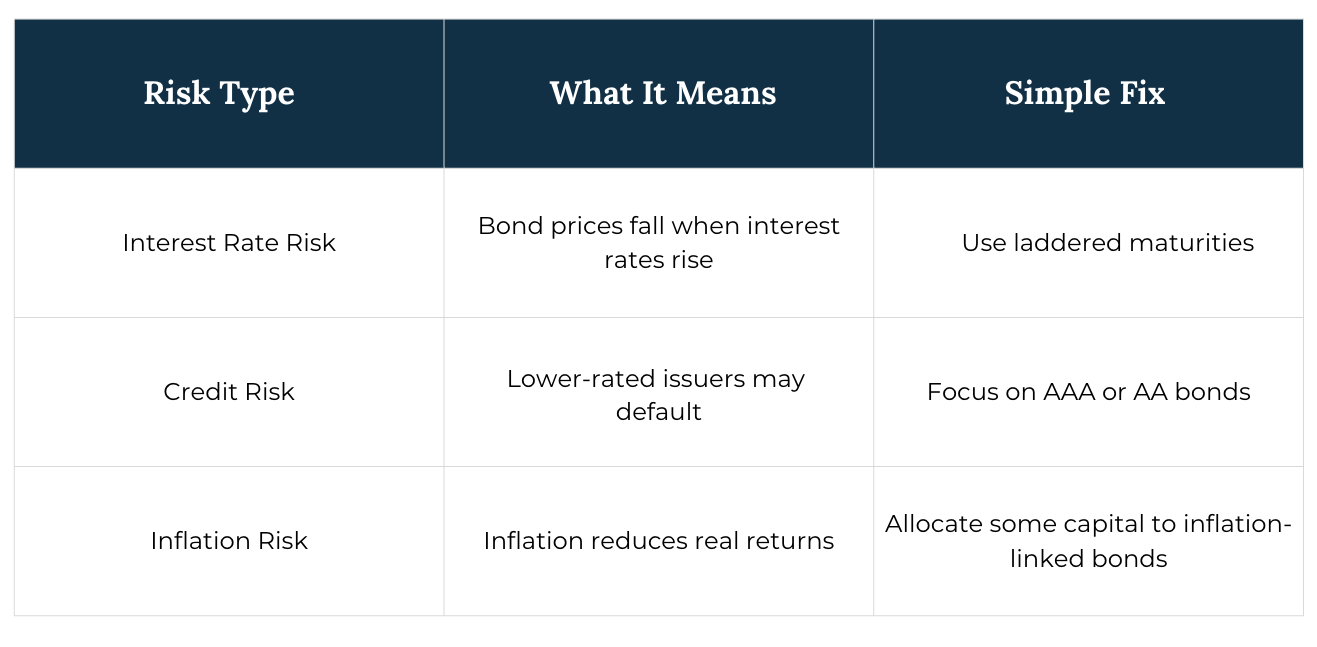
A balanced portfolio reduces the impact of these risks.
Simple Strategies to Diversify Fixed Income Investments
Investors do not need complicated financial engineering to diversify bonds. A few proven strategies work well.
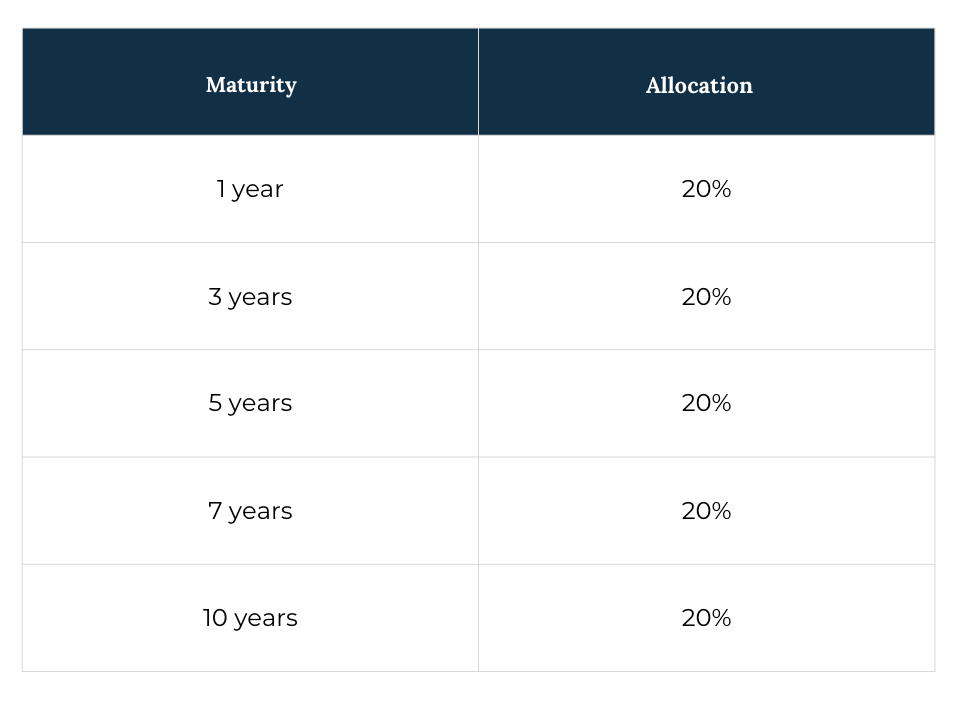
1. Bond Laddering (Best for Stability)
Bond laddering means buying bonds with staggered maturities.
Example allocation:
Benefits:
- Provides regular liquidity
- Reduces interest rate risk
- Allows reinvestment when rates change
Investors can easily build ladders using Government Securities (G-Secs) through the RBI Retail Direct platform.
2. Barbell Strategy (Balancing Yield & Liquidity)
Another simple approach is the barbell strategy, where investors combine:
- Short-term bonds (for liquidity)
- Long-term bonds (for higher yield)
Example:
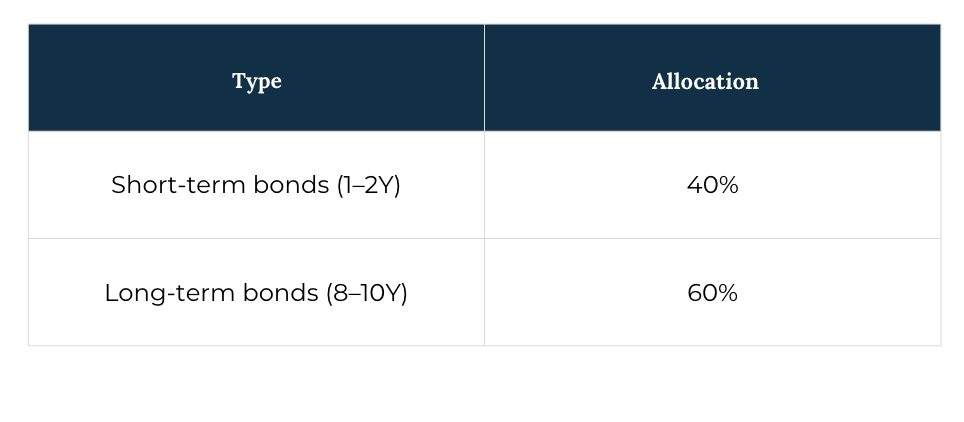
This approach balances cash flow stability with higher returns.
3. Mix Different Fixed Income Instruments
Instead of relying on one type of bond, investors should diversify across instruments.
Example portfolio structure:
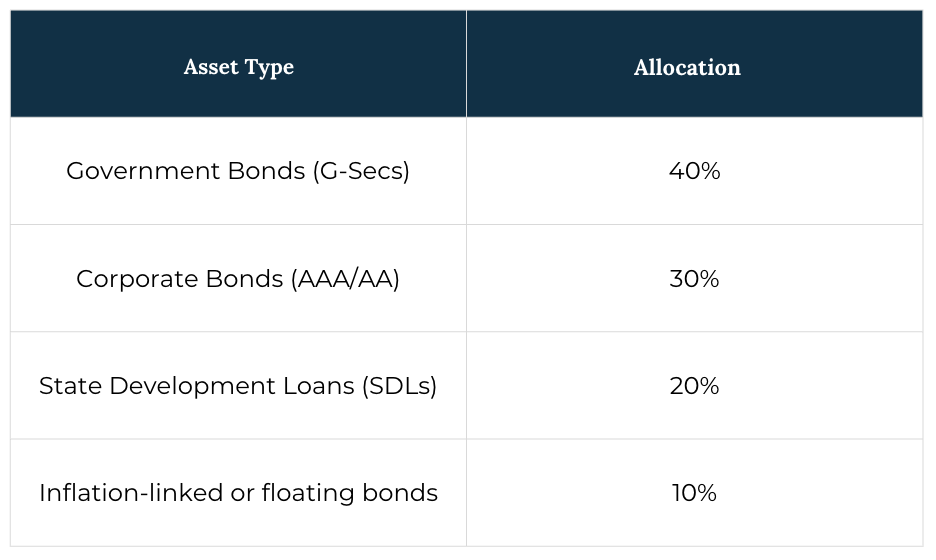
This mix combines sovereign safety with yield enhancement.
Fixed Income Opportunities in 2026
The Indian fixed income market currently offers interesting opportunities.
1. Stable RBI Interest Rate Outlook
The RBI has maintained a neutral stance on rates, while inflation has gradually moderated. This environment supports stable bond yields.
2. Attractive State Development Loans (SDLs)
SDLs often provide 30–60 basis points higher yield than G-Secs with relatively low risk.
3. Growth of Green Bonds
India’s sustainable finance market is expanding, and green bonds issued by government-backed institutions are becoming attractive for long-term investors.
4. Tax Efficiency
Long-term bond investments may benefit from favorable tax treatment depending on holding structure and investment vehicle.
Investors should evaluate tax implications carefully when structuring fixed income portfolios.
Platforms Where You Can Buy Bonds in India
Today, investing in bonds is far easier than it used to be.
Retail investors can access diversified fixed-income investments through platforms such as:
RBI Retail Direct
Allows investors to buy government securities directly from RBI auctions.
NSE goBID
Enables participation in government bond auctions via stock exchanges.
Online Bond Platforms
There are multiple Online bond Pplatforms which such as GoldenPi allow investors to explore corporate bonds and structured fixed-income products.
Investment Apps
Debt mutual funds and bond ETFs are also accessible through apps like Groww or Zerodha.
Typical process:
- Open an account on a platform
- Browse available bonds
- Evaluate yield and credit rating
- Build a diversified basket
Minimum investment for many bonds starts from ₹10,000.
Example Fixed Income Portfolio (₹10 Lakh)
Here is a simple diversified allocation for an investor seeking stability and yield.
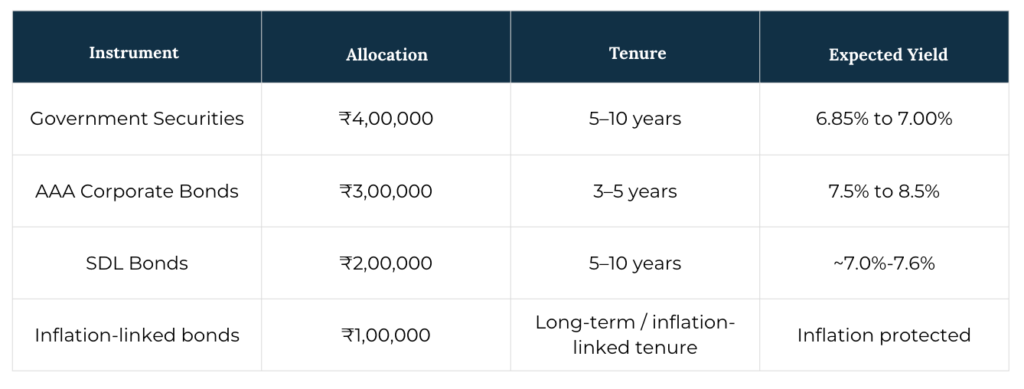
Expected portfolio yield: 7.5-8% with moderate risk
Compared to traditional FDs, this strategy could add 1-2% additional yield annually.
Frequently Asked Questions
- What is the minimum investment required for bonds in India?
Many bonds are available from ₹10,000 onwards, though some corporate bonds may require higher minimums.
- How often should a fixed income portfolio be rebalanced?
A yearly review is sufficient for most investors.
- Are debt mutual funds better than direct bonds?
Debt funds are suitable for investors seeking professional management and diversification, while direct bonds provide greater control over yields and maturities.
- Are corporate bonds safe?
High-quality AAA and AA-rated bonds from strong issuers generally offer a good balance of safety and yield.
Final Thoughts
Fixed income investing does not have to be complicated.
By combining government bonds, corporate bonds, SDLs, and inflation-linked instruments, investors can build a diversified portfolio that delivers:
- Stable income
- Higher yield than traditional FDs
- Lower risk through diversification
For both retail and HNI investors, the key is to keep the strategy simple, disciplined, and diversified.
Even starting with ₹1 lakh can help investors begin building a well-balanced fixed income portfolio.